

Preserve or Restore? Rethinking the Parisian Apartment

A Parisian apartment is never a blank canvas. It arrives with an architectural language, a cultural memory, and an intelligence embedded into its proportions, materials, and rhythms. Versailles parquet softened by time, ceiling moldings dulled by layers of paint, fireplaces that no longer function yet still anchor a room's balance — these are not decorative relics. They are part of a coherent architectural system designed for continuity and restraint. And yet, in almost every project, the same question arises: Should we preserve what exists, restore what has been lost, or start fresh altogether? It is the central question of a Parisian apartment — and it is never a purely technical one.
The real question is not whether to preserve or restore. It is how to honor the soul of a space while allowing it to live beautifully today. Preservation does not mean freezing an apartment in time. Restoration does not mean theatrical pastiche. When it is possible to keep, I almost always try to restore an apartment to its past splendor — not to recreate the past, but to repair its architectural logic and bring back what time or poor renovations have erased. Every Parisian project I take on begins with listening to the apartment first: reading its proportions, its axes, its original circulation, its forgotten intentions. Only then do I begin to intervene, gently and selectively, guided by restraint.
There are elements I almost always fight to keep, repair, or reintegrate. Versailles parquet or point de Hongrie flooring, repaired and refinished rather than replaced. Original fireplaces and overmantels, even when no longer functional, because they anchor a room emotionally and architecturally. Moldings, cornices, and ceiling medallions softened by time but still structurally intact. Doors and frames whose proportions define a space more powerfully than any piece of furniture. Window heights and alignments that govern light, symmetry, and harmony. These elements are not nostalgic gestures. They are structural intelligence embedded into the architecture.
Many Parisian apartments were heavily altered in the nineteen-eighties and nineties, a period marked by lowered ceilings, erased moldings, truncated door heights, tiled-over parquet, and sealed fireplaces. In these cases, restoration is not decorative. It is corrective. Reintroducing lost parquet patterns, missing cornices, classical door proportions, fireplace mantels, and architectural symmetry is not about recreating the past. It is about repairing the architectural logic of a space and restoring its coherence, dignity, and rhythm.
Preserving architectural heritage does not mean living without modern comfort. Quite the opposite. A truly luxurious Parisian apartment today must integrate contemporary kitchens and bathrooms, discreet climate systems, modern electrical infrastructure, and carefully calibrated lighting. I design modernity to disappear into the architecture rather than dominate it. A kitchen should feel as though it has always belonged. A bathroom should feel sculpted into the shell of the building. Lighting should enhance cornices and moldings, not flatten them. The best modernity is invisible.
Parisian apartments demand custom solutions. Off-the-shelf furniture rarely respects irregular walls, alcoves, radiators, window heights, door axes, or historical proportions. This is why I commission so many pieces specifically for each project, working with a network of exceptional artisans. True savoir-faire is not about geography. It is about precision, restraint, and longevity. When a piece is made for one apartment, by hands that understand its architecture, it becomes part of the building's future heritage.
There is a growing temptation to turn Parisian apartments into interchangeable luxury interiors — minimal, neutral, international. But what makes a Paris home extraordinary is precisely what cannot be replicated elsewhere. Erase too much, and the apartment loses its cultural identity, its architectural rhythm, its emotional gravity, and its long-term value. Luxury is not sameness. Luxury is specificity. It is the courage to preserve what others might discard, and the discernment to intervene only where it truly matters.
I do not believe in brutal contrast between old and new. I believe in continuity. In spaces that feel quietly inevitable, as though nothing has been forced, as though each element belongs. A Parisian apartment should not feel designed. It should feel resolved. The most successful projects are calm, measured, and humble. They respect what came before while preparing the apartment for the next fifty years of living.
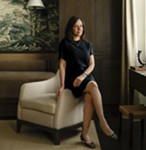
About the Author
Lichelle Silvestry
Lichelle Silvestry is the founder and creative director of Lichelle Silvestry Interiors, an English-speaking interior design studio based in Paris. Known for creating timeless interiors with warmth, elegance, and a deep understanding of her clients’ lives, she blends Parisian refinement with modern comfort for a truly lived-in luxury.
